What is a commercial network?
A commercial network is a structured communication system that connects computers, servers, phones, and other devices within a business environment. It includes physical infrastructure like cabling, switches, routers, and access points, along with the protocols and configurations that enable secure data transmission, voice communication, and resource sharing across offices, campuses, or multiple locations.
How much does it cost to set up a network for a small business?
Network installation costs vary based on office size, number of users, required infrastructure, and performance needs. Factors include cabling type (Cat6 vs. fiber), number of drops, switch and router specifications, wireless access points, and whether existing infrastructure can be reused. A professional assessment helps determine accurate pricing tailored to your specific requirements and growth plans.
What are the components of network installation?
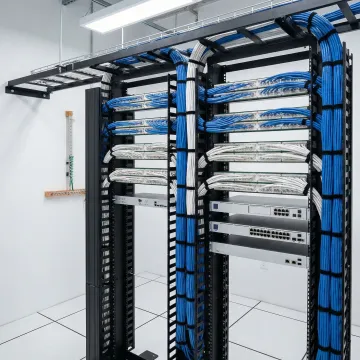
Professional network installation includes structured cabling (copper and/or fiber), patch panels, network switches, routers, wireless access points, cable pathways and conduits, telecommunications racks and cabinets, proper grounding, cable management systems, and comprehensive labeling and documentation. Each component must be installed according to industry standards to ensure optimal performance and reliability.
What are the types of network installation?
Common types include Local Area Networks (LAN) for single-site connectivity, Wide Area Networks (WAN) linking multiple locations, fiber optic backbones for high-bandwidth requirements, structured cabling systems following TIA/EIA standards, wireless networks using access points, and hybrid installations combining wired and wireless infrastructure. The right type depends on your business needs, budget, and scalability requirements.
How long does commercial network installation take?
Installation timelines depend on project scope, office size, and infrastructure complexity. A small office with 10-20 network drops might take 2-3 days, while larger deployments or multi-site projects can take several weeks. Factors include existing infrastructure condition, building access restrictions, required certifications, and coordination with other trades. A detailed project plan provides accurate timelines.
What certifications should network installers have?
Professional installers should hold certifications from recognized industry organizations. Key credentials include BICSI (Building Industry Consulting Service International) training, manufacturer certifications like Panduit or CommScope, FOA (Fiber Optic Association) certification for fiber work, and thorough knowledge of NEC (National Electrical Code), TIA, and EIA standards for low-voltage cabling installations.
Do I need fiber optic cabling for my business network?
Fiber optic cabling is recommended for high-bandwidth applications, long cable runs exceeding 100 meters, inter-building connections, data center backbones, and future-proofing against increasing bandwidth demands. While copper cabling (Cat6/Cat6A) works well for most office applications, fiber provides superior performance, immunity to electromagnetic interference, and greater scalability for growing organizations.
What is network certification testing and why is it important?
Network certification testing validates that installed cabling meets performance standards set by TIA/EIA and manufacturers. Using specialized test equipment, technicians verify signal quality, bandwidth capacity, and compliance specifications. Certification provides documented proof of installation quality, helps identify potential issues before they cause problems, and often fulfills warranty requirements for cabling systems and network equipment.