What is a cable organizer?
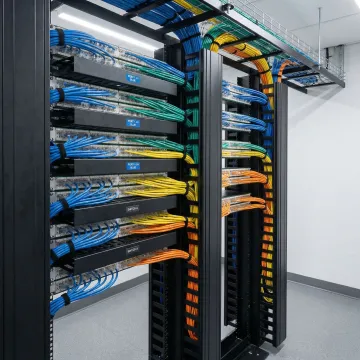
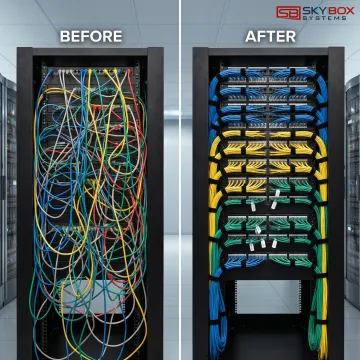
A cable organizer is a device or system designed to route, contain, and manage network cables in an orderly fashion. In professional installations, cable organizers include horizontal and vertical rack-mounted management panels, cable trays, J-hooks, D-rings, Velcro straps, and pathway systems that prevent tangling, improve airflow, facilitate moves and changes, and create organized infrastructure that's easier to troubleshoot and maintain over time.
Why is proper cable management important for network performance?
Proper cable management prevents signal interference from cable bundles that are too tight, improves airflow around active equipment to prevent overheating, reduces the risk of accidental disconnections, and makes it easier to identify and replace faulty cables quickly. Organized cabling also ensures compliance with building codes and manufacturer warranty requirements while supporting faster troubleshooting and reduced downtime.
How long does a cable organization project typically take?
Project duration depends on the scope—a single rack reorganization may take one day, while a complete communications room overhaul with abandoned cable removal can take several days to a week. We provide detailed project timelines during the assessment phase and work efficiently to minimize disruption, often scheduling work during off-hours for environments that require continuous operation.
What standards do you follow for cable management?
We adhere to BICSI, TIA/EIA, NEC, and FOA standards for structured cabling and cable management. This includes proper bend radius requirements, cable support spacing, pathway fill ratios, separation from power cabling, labeling conventions, and fire safety compliance. Our Panduit certified installers and standards-trained technicians ensure every installation meets or exceeds industry best practices.
Do you remove old or abandoned cables during reorganization?
Yes, we provide abandoned cable auditing and removal services to comply with NFPA and NEC codes. We identify unused cables, document what's being removed, and safely extract abandoned cabling from pathways, ceilings, and conduits. This improves airflow, reduces fire load, creates capacity for new cables, and ensures your infrastructure documentation accurately reflects active systems.
Can you organize cables without causing network downtime?
Absolutely. We develop detailed cutover plans that minimize or eliminate downtime. For active environments, we can work in phases, schedule changes during maintenance windows, or perform non-disruptive improvements like labeling and pathway optimization while systems remain operational. Our experience with live network environments ensures careful planning and execution.
What documentation do you provide after cable organization?
We deliver comprehensive documentation including labeled cable schedules, port mapping diagrams, rack elevation drawings, as-built pathway layouts, test results, and certification reports. This documentation serves as a critical reference for troubleshooting, capacity planning, and future modifications, ensuring institutional knowledge isn't lost during staff transitions.
How much does professional cable organization cost?
Pricing varies based on project scope, including the number of cables, complexity of existing infrastructure, whether abandoned cable removal is needed, and documentation requirements. We provide free on-site assessments and detailed proposals that break down costs transparently. Most clients find that the investment pays for itself through reduced troubleshooting time, fewer outages, and improved operational efficiency.