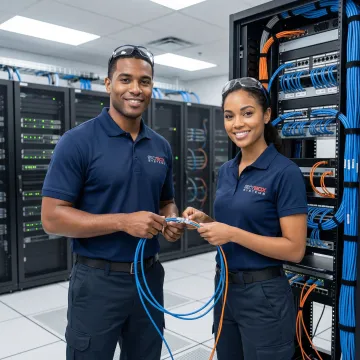
What is networking installation?
Networking installation is the process of designing, deploying, and configuring the physical and logical infrastructure that enables devices to communicate and share data. This includes structured cabling (copper and fiber), network hardware mounting, pathway construction, connectivity testing, and documentation. Professional networking installation ensures standards compliance, optimal performance, and scalability for growing organizations.
What is L1, L2, L3, and L4 in networking?
L1 through L4 refer to layers of the OSI networking model. Layer 1 (Physical) involves cables, connectors, and signals—the physical infrastructure we install. Layer 2 (Data Link) handles MAC addressing and switching. Layer 3 (Network) manages IP addressing and routing. Layer 4 (Transport) controls data flow with protocols like TCP/UDP. Our installation services focus primarily on Layer 1 physical infrastructure, ensuring a solid foundation for higher-layer network functions.
How long does a typical network installation project take?
Project timelines vary based on scope and complexity. A small office installation with a few dozen cable drops may take 1-3 days, while a multi-floor structured cabling project or data center build-out can take several weeks. During the assessment phase, we provide detailed project timelines based on your specific requirements, site conditions, and coordination needs.
Do you provide network installation services for multi-site organizations?
Yes, Skybox Systems specializes in single-site and multi-site network installations across Florida and Georgia. We support MSPs, national contractors, and enterprises with coordinated deployments, consistent standards compliance, and unified documentation across all locations to ensure seamless network connectivity.
What certifications should I look for in a network installation provider?
Look for providers with BICSI-trained technicians and manufacturer certifications like Panduit Certified Installers. Standards training in NEC, TIA/EIA, and FOA ensures installations meet industry compliance requirements. These certifications demonstrate technical competence and commitment to quality, reducing the risk of performance issues and future troubleshooting costs.
Can you upgrade or expand our existing network infrastructure?
Absolutely. We handle network infrastructure upgrades, expansions, and refreshes including cable additions, fiber upgrades, rack reorganization, and network hardware relocations. Our team assesses your existing infrastructure, identifies improvement opportunities, and implements changes with minimal disruption to your operations.
What types of cabling do you install?
We install Cat5e, Cat6, and Cat6A copper cabling for voice and data networks, as well as single-mode and multimode fiber optic cabling (OM1, OM2, OM3, OM4) for backbone connectivity and high-speed applications. Our certified installers select the appropriate cabling type based on your performance requirements, distance, and budget.
Do you provide certification testing for network installations?
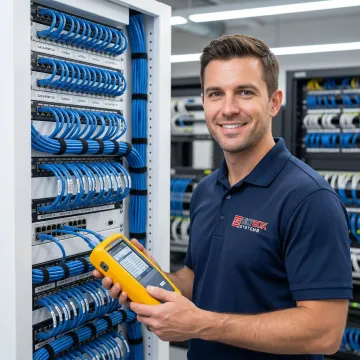
Yes, we provide comprehensive certification testing and documentation for all copper and fiber installations using industry-standard equipment. Certification testing validates performance, ensures compliance with TIA/EIA standards, and provides documented proof of installation quality for warranty purposes and future reference.