What is telecommunication installation?
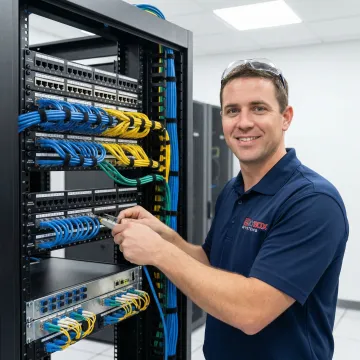
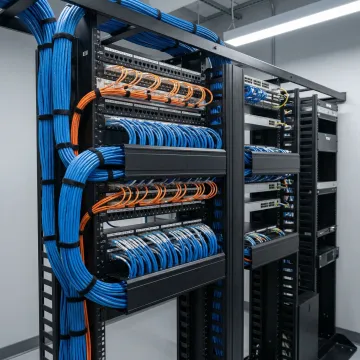
Telecommunication installation involves the design, deployment, and configuration of communication infrastructure including structured cabling, fiber optics, voice and data networks, and connectivity systems. This includes physical cabling installation, termination, testing, certification, and documentation to support reliable communication across business, institutional, or residential environments following industry standards like BICSI, TIA/EIA, and NEC.
What is the main standard for telecommunications cabling in the US?
The primary standard for telecommunications cabling in the United States is ANSI/TIA-568, published by the Telecommunications Industry Association (TIA). This comprehensive standard defines specifications for commercial building cabling including copper twisted-pair and fiber optic systems, backbone and horizontal cabling, telecommunications spaces, pathways, and performance requirements. Compliance with TIA-568 ensures interoperability, performance consistency, and support for current and emerging technologies.
What is telephone cabling installation?
Telephone cabling installation involves deploying copper twisted-pair cables (typically Cat3, Cat5e, or Cat6) to support voice communication systems including traditional analog phones, VoIP systems, and PBX networks. The process includes cable routing from demarcation points through telecommunications rooms to individual workstation locations, proper termination at patch panels and wall outlets, labeling, testing, and documentation according to manufacturer specifications and building codes.
What types of cable are used in telecommunications installations?
Telecommunications installations commonly use Cat5e, Cat6, and Cat6A copper twisted-pair cables for voice and data networks, plus multimode fiber (OM1, OM2, OM3, OM4) and single-mode fiber for high-bandwidth backbone and long-distance connections. Cable selection depends on bandwidth requirements, distance, environmental conditions, and future scalability needs. Professional installations follow manufacturer specifications and industry standards for optimal performance.
How long does a telecommunications cabling installation take?
Installation timelines vary based on project scope, building size, and complexity. A small office with basic data cabling might complete in 1-3 days, while comprehensive structured cabling for a multi-floor building or campus could require several weeks. Fiber optic installations, testing, and certification add time. Professional installers provide detailed project schedules after initial site assessment and design review.
Do telecommunications cabling installations require certification testing?
Yes, professional telecommunications installations should include certification testing to verify performance, compliance with industry standards, and warranty coverage. Testing uses specialized equipment to measure parameters like attenuation, crosstalk, return loss, and propagation delay for copper, plus insertion loss and optical return loss for fiber. Certification provides documented assurance of system performance and helps troubleshoot future issues.
What is structured cabling and why is it important?
Structured cabling is a standardized, organized approach to telecommunications infrastructure that uses consistent architecture, components, and documentation. It provides flexibility, scalability, and simplified management compared to point-to-point cabling. Structured systems support multiple applications (voice, data, video, security) on a single platform, reduce downtime, simplify troubleshooting and moves/adds/changes, and support technology upgrades without complete infrastructure replacement.
How do I choose between copper and fiber optic cabling?
Choose copper (Cat6/Cat6A) for distances under 100 meters with bandwidth requirements up to 10 Gbps, cost-sensitive installations, and Power over Ethernet needs. Select fiber optic for distances over 100 meters, bandwidth over 10 Gbps, electromagnetic interference immunity, future-proofing for emerging technologies, or backbone/campus interconnects. Many installations use hybrid approaches with fiber backbones and copper horizontal distribution. Professional assessment ensures optimal selection for specific requirements.